Attitudes des élèves de 10e année à l’égard de l’activité physique et compréhension des enseignants
Publié précédemment dans le volume 81, numéro 3
Objective
This investigation examined grade 10 high school students’ attitudes and values toward physical education and physical activity, as well as grade 10 physical education teachers' understanding of students' attitudes and values as a variable in physical education dropout rates and adolescent obesity.
Grade 10 students and teachers were specifically selected as this is the final grade level in which physical education must be successfully completed to meet the minimum requirements for a high school graduation diploma in British Columbia (British Columbia Legislative Assembly, 2006). Moreover, both male and female adolescents are less physically active than younger children and a more thorough understanding of this phenomenon is imperative to ameliorating the present obesity crisis amongst adolescents who are obese (Active Healthy Kids Canada, 2013).
The aim of this study was twofold: firstly, to examine male and female grade 10 high school students’ attitudes and values to physical education and physical activity as a variable in adolescent obesity; and secondly, to investigate grade 10 teachers' understanding of students' attitudes and values toward physical education in schools and physical activity (in general). Students' attitudes and values, as well as teachers' understanding were measured through the use of a questionnaire-based survey. For the purposes of this investigation, Body Mass Index or BMI (defined as weight in kilograms divided by height in metres squared) was used to determine obesity levels amongst participants (Canadian Society for Exercise Physiology, 2003). This is in accordance with the International Obesity Task Force's approach to measuring obesity amongst adolescents. For the intentions of this particular study physical activity included, but was not limited to, school (regular curricular-based gym class instruction, as well as intramural and after-school sports or programs) and extracurricular physical activities which students might engage in on their own time such as programs offered through fitness facilities, recreation centres, and community-based sports clubs, etc.
The hypothesis for the investigation of grade 10 students’ attitudes and values toward physical education in school and physical activity (in general) was that their attitudes and values influence physical activity behaviour patterns. The second component of the investigation hypothesized that grade 10 teachers ' understandings would directly influence (through teachers’ curriculum delivery) students' physical activity experiences and behaviour patterns.
Design and method
Students' attitudes and values, as well as teachers' understandings were measured through the use of a questionnaire-based survey that focused on behavioural, cognitive and affective sub-domains.
The study used standardized questionnaires within a phenomenographic methodology (Marton, 1981; Leedy & Ormrod, 2013). Simple, clear, unambiguous language was used and individual questions were peer-reviewed by specialists to ensure validity. In addition, questionnaires were carefully scrutinized for items that could have potentially resulted in participant bias. Furthermore, all participants received identical questions in the same format (however student questionnaires differed from teachers’ questionnaires) and responses were documented in a consistent manner to increase reliability (Boynton & Greenhalgh, 2004). Grade 10 students were surveyed with a 33-item questionnaire, and Grade 10 teachers completed a 12-item instrument.
Student questionnaires employed closed-ended items that asked respondents to select from four alternatives, although space was provided in the lower half of each question for students to write their feelings on the particular subject if they wished. Teacher questionnaires, on the other hand, consisted of 12 entirely open-ended questions that asked participants to formulate their own answers. Approximately six centimetres of space was provided at the end of each question to encourage longer, richer, more detailed responses from teachers (Jackson, 2008).
Participants
Participants’ were recruited directly by the principal investigator using purposive sampling with the goal of maximizing information. In-depth standardized questionnaires were administered to 87 (43 male and 44 female) grade 10 physical education students, and three teachers from an urban high school located in the West Kootenay region of the Interior of British Columbia, Canada. Of the 43 male students, 34 had a BMI less than 25 ('normal weight'); 8 of the BMIs were between 25 and 29.9 ('overweight'), and one was classified as 'obese' with a BMI of 30 or higher. With respect to the 44 female students, 39 had a BMI lower than 25; five were between 25 and 29.9, and none were 30 or higher. Regarding the three grade 10 physical education teacher participants, all were male. Moreover, one teacher had eight years experience, another had 15 years, and the other had 30 years teaching experience.
Results
In total, 87 students (43 males and 44 females) participated in this survey. Students' responses were categorized according to behavioural, cognitive and affective sub-domains in addition to whether they referred to school-based physical education or extracurricular physical activity. Interestingly, less than half of the participants (33% or 14 of the males and 41% or 18 of the females) responded more favourably to school-based physical activity questions. However, 67% (29) of the males and 59% (26) of the females responded less favourably. Of the 14 more favourable responses by males, one was in the obese BMI category (≥30). Regarding the 18 more favourable responses by females, one was from a student in the overweight category, and the remaining 17 were from students in the normal weight category.
The hypothesis for the first part of this investigation was that grade 10 students’ attitudes and values toward physical education in school and physical activity (in general) influence their physical activity behaviour patterns. Thus, the focus was on examining the role of environmental and behavioural factors, not just exercise and diet. Survey results strongly support this hypothesis. However, results of this survey do not demonstrate a positive correlation between students' BMI and their attitudes toward school-based physical activity as 67% of the male and 59% of the female students responded less favourably to school-based physical activity related questions.
Positive views on extracurricular activities
With respect to results of students' extra-curricular-based physical activity questions, 74% (32) of the males and 81% (35) of the females responded more favourably. Of the male responses, one was from the obese category, six were from the overweight category, and 25 were classified as normal. More favourable female responses consisted of four from overweight and 31 from normal weight students. Less favourable responses from female participants included two from overweight and nine from normal weight; whereas one overweight female and seven normal weight females (one did not select an answer) responded less favourable. Thus students in all bodyweight categories, regardless of BMI, maintained more favourable views toward extra-curricular physical activity completed outside of the school environment and were much more likely to be involved in physical activity during their own time. This pattern of responses was consistent in all questionnaire items regardless of whether they were cognitive, behavioural or affective in nature. Moreover, students responded favourably to all questions pertaining to the effect of school-based physical education and extra-curricular physical activity in enhancing social skills and improving health, regardless of BMI.

Skills gap
However, students' responses to questions regarding skill level required to succeed in school-based physical education were quite surprising. Approximately 50% of students (even those whose BMI was categorized as "normal") felt they were not skilled enough in sports to fully enjoy school-based physical education. In addition, those with a higher BMI were less likely to continue school-based physical education the following year (grade 11) when it becomes optional and is not required for a high school graduation diploma. Although it should be noted that nearly half (44%) of the male and 54% of the female students categorized as normal weight also stated they would not continue physical education beyond grade 10. Of particular interest was (cognitive) question 27 which stated: “If you are not good at something in school-based physical education other people laugh and make you embarrassed.” Amongst female students, 80% of those categorized as overweight, and 63% of the male overweight students (including the one obese male student) strongly agreed with this statement. With respect to normal weight respondents, 46% of the females and 35% of the males expressed views similar to their overweight colleagues.
Social priority
With respect to teacher questionnaires, while all research items established their understanding of students' behaviour, findings referring to teachers’ perceptions of students’ attitudes and values were expressed explicitly through affective and cognitive domains. Consequently, responses to affective-based questions indicate the most common theme amongst participants’ (all three teachers) understanding of students' greatest joy from school-based physical education encompassed, “being active and having fun while interacting with friends.” One teacher with 15 years’ experience responded: “Socializing with friends and having opportunities to be fully engaged is really important to students.” One teacher with eight years experience commented: "Students being able to participate and socialize without the added stress of having to be in a classroom and sitting down for an entire period. I think that's what gives students the greatest joy from physical education." Moreover, the teacher with 30 years experience stated that enjoyment of school-based physical education also included “being part of a team” as well as being in a competitive environment. Interestingly, there was consensus amongst teachers’ that “working hard” is what students' enjoyed least about physical activity. A teacher with 15 years experience stated, “Fitness-based activities where sustained effort is required is something students generally don't like. This would include things like running programs, strength training and circuit training."
Regarding what was most meaningful to students’ in physical education class, teachers' stated that: “socializing, being fully engaged while playing games, and having fun were most imperative.” These themes, in this specific order and as a single response to the question, were asserted by all three teachers. In response to what best motivates students’ to participate in physical education class and engage in physical activity after completing high school, respondents provided a variety of answers. A teacher with eight years experience asserted that: “Learning life-long skills and having a comfortable (realistic) goal they can achieve would help keep students active once they were completed school.” The respondent with 15 years experience stated: “Possessing knowledge of fitness principles and concepts, as well as an understanding of health benefits are a key to continued physical activity.” Lastly, the teacher with 30 years experience claimed that: “Positive experiences in physical education are the best motivator for leading students to try new things out of school.”
Wish list for PE curriculum
Responses to cognitive-based questions indicate that only one teacher (with 30 years experience) believed that students would change the current physical education curriculum. More specifically, he stated that: “Students would want more games where they would not have to try very hard.” The teacher with 15 years experience left this particular question blank, and the teacher with eight years experience responded: “I don't believe most students care or give it any thought.” When teachers were asked what they would change about the current physical education curriculum, the teacher with 30 years experience noted he would implement more fitness and endurance-related activities. The teacher with 15 years experience affirmed this position by stating: “I would make it more fitness oriented. Maybe we should allow students to choose which stream they could focus on for the year (e.g., sports skill centered or fitness and health centered).” The teacher with eight years experience chose not to respond to this particular question.
Engagement strategy
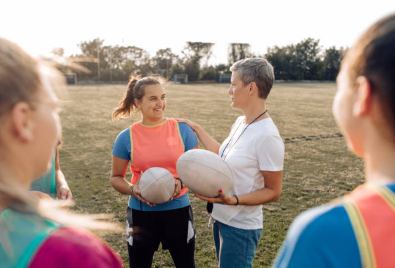
When asked about the most effective strategies for engaging lower-skilled students in physical education classes, the teacher with 30 years experience suggested arranging students into teams that would allow them to be fully engaged while providing an opportunity to experience success. The emphasis here would be on having students participate with others who are at a similar skill and ability level. The teacher with 15 years experience listed the following strategies: setting goals; noticing small improvements; and focusing on self-improvement, not on others. Lastly, the teacher with eight years experience stated: “Showing effort to improve and participate rather than hammering away at a particular skill.”
Obesity: perceived biggest influencers
Regarding key factors that contribute to the current increase in adolescent obesity, the most experienced teacher included the availability of junk food and the instant gratification of video games. The teacher with 15 years experience stressed the role of parents in dealing with rising obesity levels amongst adolescents. This included parents setting poor examples for their children with respect to diet, lack of physical activity and a generally inactive lifestyle, passing on parents’ negative attitudes about physical education to their children, and parents not teaching/modeling resilience and grit. The prevailing attitude, noted the teacher, is that if it is difficult then it is okay to quit. The teacher with eight years experience suggested making physical education mandatory throughout all grades, and not giving students the option of dropping it after grade 10. He also stressed the importance of providing physical education all year, as opposed to the current situation whereby students only take PE one semester per academic year.
Barriers to enjoying physical education
The final question dealt with what teachers believe to be some of the greatest barriers to overweight and/or poorly skilled students’ enjoyment physical education. The teacher with 30 years experience listed: "Being one step behind which leads to frustration, a lack of drive to do better, as well as the fact that it is easier to give up than try harder." The teacher with 15 years experience stated: "Many activities have become too difficult for overweight kids. There are also students with little or no experience with skill-based activities. Students show low resilience and a general lack of grit when it comes to sticking with a fitness program, and their need for instant results often means they end up quitting." The least experienced teacher simply stated a lack of parent interest as being the greatest barrier for overweight and/or poorly skilled students.
Results of the study suggest that there must be a greater range of activities from which to choose including sports that do not demand highly developed motor skills, but emphasize fitness and health.
Discussion and conclusions
The fact that attitudes are learned suggests that educators could play an important role in influencing them, which may decisively impact on future participation in physical activity amongst youth. “Teachers can play a major role by providing the 'right' opportunities and experiences for students to improve their dispositions toward physical education (the attitude object) which ultimately can help improve attitude toward the subject matter” (Silverman & Subramaniam, 1999).
While teachers can't do much about extra-curricular physical activity, they can do something about school-based physical education. This might include addressing some of the problems that deal with issues such as students feeling alienated during physical education class, or working to provide opportunity for active participation in a variety of activities and at different rates of intensity. Other approaches could involve having students and teachers re-examine some of the so-called ideal characteristics that have traditionally been deemed important for being successful at physical education, such as possessing exceptionally strong motor skills. Interventions such as these could work toward demystifying the misconception held by so many students that physical education is inherently less enjoyable than other subjects. By making school-based physical education more interesting and exciting, it will hopefully become more enjoyable to students and all will benefit from this important subject, resulting in healthier adolescents and lower incidence of obesity.
AUTEURS